
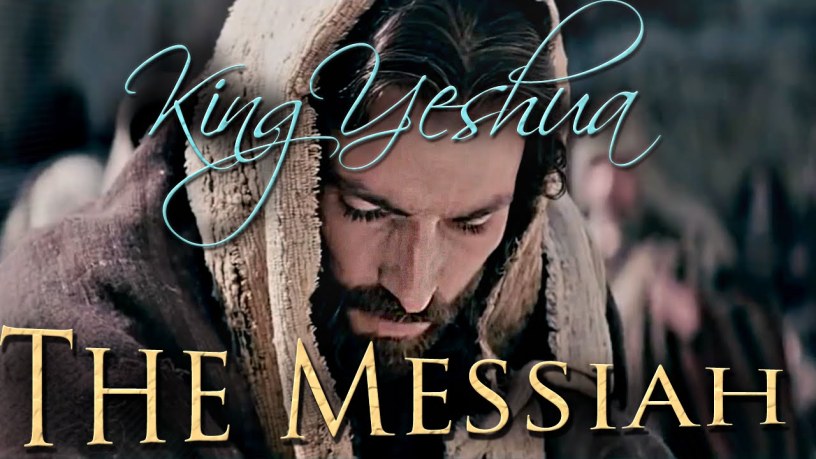
What was “Yeshua’s secret Zionist mission”? If there was one term most people would never use in connection with Yeshua is the term “Zionist.” This is because they have a warped view of the term in the West ever since the events of October 7, 2023 in Israel. Some might even argue that the word “Zionist” or “Zionism” did not even exist in the first century, C.E. Technically, they would be correct since the words “Zionism” and “Zionist” were coined by Nathan Birnbaum, an Austrian intellectual, in 1890. He defined “Zionism” as –
Its general definition means the national movement for the return of the Jewish people to their homeland and the resumption of Jewish sovereignty in the Land of Israel.
Since the establishment of the State of Israel in 1948, Zionism has come to include the movement for the development of the State of Israel and the protection of the Jewish nation in Israel through support for the Israel Defense Forces. (“Zionism: A Definition of Zionism.” jewishvirtuallibrary.org/jsource/Zionism/ zionism.html)
Although the words “Zionism” and “Zionist” did not exist prior to 1890, the concept was definitely there for almost two millennia before Yeshua was ever conceived or born. The concept of “Zionism” actually began when God, who is the greatest of all Zionists, called Avram to leave his old life behind and to follow Him to a land that he had never seen, and it would be this land, the “Promised Land” of Canaan, that God promised to give to Abram and his covenant descendants, the people of Israel.
Most people do not see the connection between “Zionism” and Yeshua because the nature and content of Yeshua’s life and message were removed from their intended Jewish contexts and framework and placed in a foreign context and framework – the religion of Christianity – and then they were altered and changed beginning in the late first century, C.E., after the destruction of Jerusalem and the Holy Temple by the Romans under Titus in 70 C.E. It was at this point when many Gentile (non-Jewish) believers, called “Christians” by the surrounding non-believers, began this process of alteration and change to his life and message. After the destruction of Jerusalem and the Holy Temple in 70 C.E., and then the death of Yochanan (John) the Beloved, they erroneous believed that these were “evidence” that God had turned His back on the Jewish people, and that they had gotten the original “kingdom message” wrong, so they began to spiritualize everything. It was at this point that Christianity as a separate, distinct religion began.
So if we really want to understand “Yeshua’s Secret Mission” we need to place it back into its original Jewish contexts and framework.
Yeshua’s Mission – “Its True Focus”?
The true focus of Yeshua’s life and mission was not about him dying for the forgiveness of sins, as many Christians and Messianic believers teach. In Luke 4, Yeshua explicitly tells us the reason and purpose for why he had been sent.
When day had come, he [Yeshua] left and wnt away to a lonely spot. The people looked for him, came to him and would have kept him from leaving them. But he said to them, “I MUST ANNOUNCE THE GOOD NEWS OF THE KINGDOM OF GOD to the other towns too – THIS IS WHY I WAS SENT.” He also spent time teaching in the synagogues of Y’hudah [Judah].” (Luke 4: 42-44, CBJ; emphasis added)
Yeshua makes it explicitly clear that the reason why he had been sent was to “announce the good news of the kingdom of God. ” Yet have you ever wondered when most mainstream Christians and Messianic believers present “the gospel” (“the good news”), why they do not discuss Yeshua’s own teaching for why he had been sent? He did not say anything about him dying for people’s sins. Perhaps the true reason is that they really do not know how his death and resurrection have anything to do with the message he was sent to announce by God. Am I saying that he did not actually die by crucifixion or was raised from the dead by God? No, I am saying that this message of his death and resurrection for the forgiveness of sins was not the message that he was sent to teach and proclaim to the whole House of Israel.
“The Kingdom of God” – “The True Good News”?
Yet this provokes the question, “Why does Yeshua need to ‘announce the good news of the kingdom of God’?” If we combine the passage from Luke 4 with a passage from Mark 1, we gain some interesting insights.
After Yochanan [John] had been arrested, Yeshua came into Galil [Galilee] proclaiming the GOOD NEWS FROM GOD, “The time has come, GOD’S KINGDOM is near: Turn to God from your sins and believe THE GOOD NEWS.” (Mark 1: 14-15, CBJ; emphasis added)
This is hoe this verse is translated and understood in most modern Christian and Messianic translations, yet because of their preconception of what they believe a certain phrase means, they have omitted a critical part of the message. In order to see this, we need to compare this passage with the same passage in the King James Version.
Now after that John was put into prison, Jesus [Heb. Yeshua] came into Galilee, PREACHING THE GOSPEL OF THE KINGDOM OF GOD, and saying, The time is fulfilled, and THE KINGDOM OF GOD is at hand: repent ye, and believe THE GOSPEL. (Mark 1: 14-15, KJV; emphasis added)
When we compare this same passage from both the Complete Jewish Bible (CJB) and the King James Version (KJV), we discover three interesting things:
- In the CBJ, the words “announcing” (Luke 4:43) and “proclaiming” (Mark 1;15) are translated as “preaching” in the KJV. But is “announcing” and “proclaiming” the same thing as “preaching”? Most people today we see these are very different things, yet the Greek word that is used literally means “to announce.”
- The phrase “Good News” in the CJB is translated as “gospel” in the KJV. The word “gospel” is the Old English translation of the Greek word euangelium (G ), which means “who brings good news.”
The phrase “from God” in Mark 1 in the CBJ is translated in the KJV as “the kingdom of God” in the KJV. By doing so, most modern translations and Messianic translations miss a critical part of the life and message of Yeshua, as well as its Zionistic connection. It is all wrapped up in the phrase “the kingdom of God.” This “phrase “the kingdom of God” is the heartbeat and pulse of all that Yeshua did and taught. In Normal Perrin’s book, Rediscovering the Teaching of Jesus (Harper & Row, 1976), he writes,
The central aspect of the teaching of Jesus [Heb. Yeshua] was that concerning the Kingdom of God. Of this there can be no doubt and today no scholar does, in fact, doubt it. Jesus appeared as one who proclaimed the Kingdom; all else in his message and ministry serves a function in relation to that proclamation and derives its meaning from it. (54)
In fact, “the kingdom of God” is so much the pulse and heartbeat of Yeshua that for most scholars, if we miss the kingdom of God, we miss Yeshua. The problem is that most people actually do miss the significance of this phrase, thereby missing Yeshua’s heartbeat and pulse.
Have you ever wondered, “Why did they leave the words “the kingdom of” out of their translations? Most modern translators, including Messianic translators, make the assumption that the phrase “the kingdom of God” is just a Jewish way to say “God,” This is actually true in many Jewish writings, even in the Gospels, but is this always the case? The short answer that may surprise – if not shock – most people is “no, this is not always the case.” If we want to properly understand this phrase, “the kingdom of God,” we must understand it from a Jewish perspective.
“The Kingdom of God” – “Its Jewish Meaning”?
What is “the Kingdom of God”? Rabbi Solomon Schechter (1847-1915), the founder and president of the United Synagogue of America, the President of the Jewish Theological Seminary of America, and the architect of American Conservative Judaism, writes in his book, Aspects of Rabbinic Theology (Jewish Lights, 1905) that there are two different general aspects of the phrase “the kingdom of God”:
- The Invisible Kingdom: Rabbi Schechter writes that this aspect “is mainly spiritual expressive of a certain attitude of mind, and possessing a more individual character (66). Christians refer to this aspect of the “kingdom” as God’s rule and reign over the spiritual realm, including the spiritual lives of individuals. Although Christians and Jews do agree about the general concept, they differ in regard to some of the specifics.
- The Visible Kingdom: This other aspect of “the kingdom of God” he divides into two specific aspects: “the kingdom of God (Universal)” and “the kingdom of God (National).”
A. “The Kingdom of God (Universal)”: This aspect of “the kingdom of God” involves the natural, physical universe, including everything on the earth. Of course, this would include all the galaxies, stars, planets, asteroids/meteors, and all that He created on the earth, including humanity.
This is a point of distinction between Christians and Jews. Jews believe that God actively rules and reigns over the earth, including the nations and all of humanity, but Christians do not. Christians believe that when God created Adam that He gave him ownership of the world to him, and that when he sinned by eating from TheTree of Knowledge of Good and Evil, he handed ownership of the earth over to Satan, making him “the god of this world” (2 Corinthians 4:4), but Jews teach that God has always maintained and continued to be “the Master/Owner of this world.”
B. “The Kingdom of God” (National): This aspect of “the kingdom of God” is described by Rabbi Schechter as –
Indeed, the credit is given to Israel that they suppress the Evil Yezer [evil inclinations of the heart], declare his (God’s) unity, and proclaim him as king every day, and wait for his kingdom, and hope to see the building of his Temple, and say every day, “The Lord doth build up Jerusalem: he gathereth together the outcasts of Israel” (Ps. 147 2). The idea of the kingdom is accordingly often so closely connected with the redemption of Israel from the exile, the advent of the Messiah, and the restoration of the Temple, as to be inseparable from it.” (93)
I am convinced from the evidence of Scriptures and extra-biblical texts that when Yeshua “proclaimed the good news of the kingdom of God,” this was the subject matter of his teachings. For examplle, we see throughout the Gospel of Matthew. For example, in Matthew 4, we read,
When Yeshua heard that Yochanan [John] had been put in prison, he returned to Galil; but he left Natzeret and came to live in K’far-Nachum [Napernaum]. a lake shore town near the boundary between Z’vulum and Naftali….From that time on, Yeshua began proclaiming, “Turn from your sins to God, for the Kingdom of Heaven is near!” (Matthew 4:12-13, 17, CBJ)
And then a few verses later,
Yeshua went all over the Galil teaching in their synagogues, proclaiming the GOOD NEWS OF THE KINGDOM, and healing people from every kind of disease and sickness. (Matthew 4:23, CBJ)
And again in Matthew 9,
Yeshua went about all the towns and villages, teaching in their synagogues, proclaiming the GOOD NEWS OF THE KINGDOM, and healing every kind of disease and weakness. (Matthew 9:35, CBJ; emphasis added)
“The Kingdom of God” – “Why didn’t it happen then?”
So if Yeshua was sent by God to announce the beginning of “the kingdom of God (National)”: the “Redemption (Heb. Ge’ulah) and the Restoration of Israel,” then why didn’t it happen then? Because he was NOT announcing the beginning of an event that they could experience during their own lifetimes, as many of them falsely believed it to be, but he was announcing the beginning of the next phase of God’s Kingdom process, a process that has been going on now for almost two millennia.
“The Kingdom of God” – “Do We Have Any Evidence of This?”
Do we have any evidence that hints at or indicates this? This may surprise – even shock – most people, but we actually do in the beginning verses of Acts 1. In this passage, Luke is describing what Yeshua taught right before God took him into the heavenlies, like he had Hanoch (Enoch) and the prophet Eliyahu (Elijah) before him.
Dear Theophilos,
In the first book [the Gospel of Luke], I wrote about everything Yeshua set out to do and teach, until the day when, after giving instructions through the Ruach HaKodesh [Holy Spirit; “the Spirit of God”] to the emissaries whom he had chosen, he was taken up into heaven. After his death he showed himself to them and gave many convincing proofs that he was alive. During a period of forty days they saw him. and he spoke with them about THE KINGDOM OF GOD…When they were together, they asked him, “Lord, are you at this time going to restore self-rule to Israel?” (Acts 1: 1 – 3, 6, CBJ)
Yeshua spent his entire ministry speaking and teaching about “the kingdom of God (National),” and even after his death and resurrection, he is still teaching them about “the kingdom of God (National).” He did not change messages after his death. There is not a single verse or passage where Yeshua EVER tells his disciples to stop teaching “the kingdom of God” and start teaching people about his death and resurrection for the forgiveness of sins. His death and resurrection did not replace or change “the gospel” at all. What we do see in the Scriptures is that his life, ministry, death and resurrection become a supplementary part to explain who brought “the gospel of the kingdom” to Israel, and what had to happen to open the way so that “the gospel of the kingdom” could happen. Thus, the main message of Yeshua’s disciples was “the kingdom of God” and their second message was about Yeshua of Nazareth, the Anointed One.
In the Next Issue:
I want to discuss some more biblical evidence for “Yeshua’s Secret Zionist Gospel.”

